
How to Fix a Non-Converting Landing Page: A Step-by-Step Guide


Your Landing Page Isn’t Broken—It’s Misunderstood
You’ve done everything right.
You ran ads. You drove traffic. You even got clicks at a decent cost.
And yet… nothing.
No leads. No sales. No conversions.
It’s frustrating, but here’s the truth: most landing pages don’t fail because of traffic—they fail because of disconnect.
A disconnect between:
What your audience expects
What your page communicates
What action you want them to take
This is exactly why understanding How to Fix a Non-Converting Landing Page: A Step-by-Step Guide isn’t just useful—it’s essential.
In this guide, we’ll break down exactly how to diagnose, fix, and optimize your landing page so it actually converts—whether you’re a small business owner, digital influencer, or marketer.
Let’s fix what’s leaking your revenue.
What Is a “Non-Converting” Landing Page?
Before fixing anything, let’s define the problem.
A landing page is considered “non-converting” when:
Visitors don’t take the intended action (buy, sign up, download)
Bounce rate is high
Time on page is low
Conversion rate is below industry benchmarks (typically <2%)
But here’s the nuance: A non-converting page doesn’t always mean a bad page—it often means a misaligned page.

Step 1: Identify the Real Problem (Not the Obvious One)
Diagnose Before You Prescribe
Most people jump straight into redesigning the page. That’s like repainting a car when the engine is broken.
Start with data.
Key Metrics to Analyze
Conversion Rate: Are people taking action?
Bounce Rate: Are they leaving immediately?
Scroll Depth: Are they even seeing your offer?
Click Heatmaps: What are they interacting with?
Tools You Should Use
Google Analytics
Hotjar
Microsoft Clarity
Real-World Example
A D2C skincare brand thought their product page was failing.
Turns out:
70% of users never scrolled past the hero section.
Problem? Not the product. Not the pricing.
The message above the fold was weak.
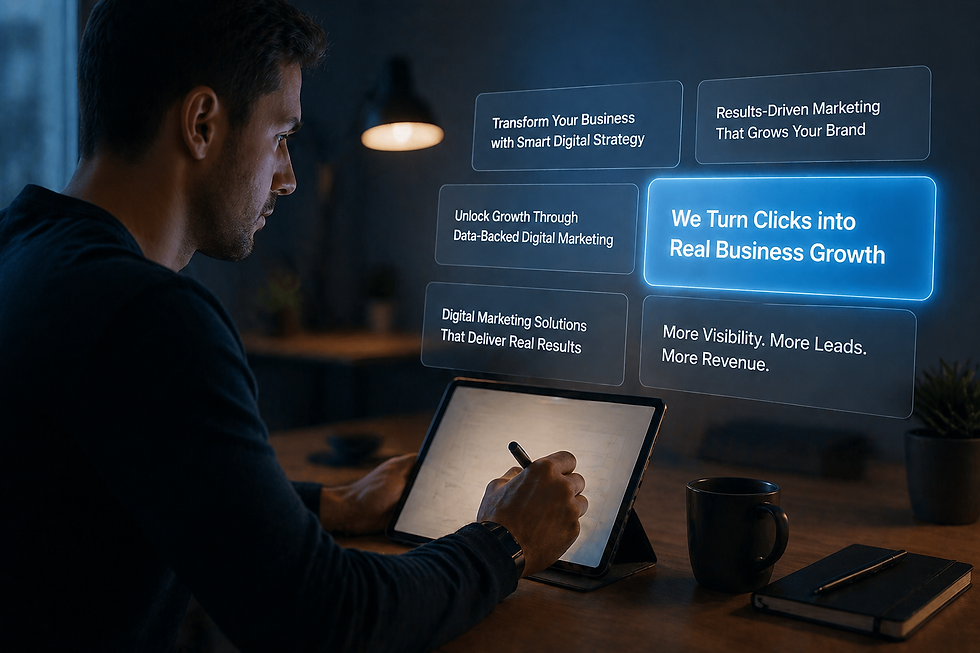
Step 2: Fix Your Headline (This Is Where You Win or Lose)
Your headline is your first impression—and most people get it wrong.
The Problem with Most Headlines
They are:
Vague
Feature-focused
Self-centered
The Formula That Works
A high-converting headline should:
Address a pain point
Promise a result
Be specific
Weak vs Strong Example
Weak: “Grow Your Business Online”
Strong: “Get 3X More Leads in 30 Days Without Increasing Your Ad Spend”
See the difference?
One is generic. The other is irresistible.
Quick Fix Checklist
Does your headline solve a problem?
Is the outcome clear?
Would a stranger understand it in 3 seconds?
If not, rewrite it.
Step 3: Align Your Traffic with Your Message
This is where most conversion leaks happen.
The #1 Mistake
Running ads that say one thing…And sending users to a page that says another.
This Creates:
Confusion
Distrust
Drop-offs
Example
Ad: “Flat 50% Off Today Only” Landing Page: No mention of the offer above the fold
Result? User leaves within seconds.
Fix It
Ensure:
Same headline language
Same offer
Same tone
This is called message match, and it’s non-negotiable when learning How to Fix a Non-Converting Landing Page: A Step-by-Step Guide.
Step 4: Simplify Your Design (Clarity Converts)
More design ≠ better design.
The Real Problem
Most landing pages try to do too much:
Too many colors
Too many sections
Too many CTAs
What Actually Works
Clean layout
Visual hierarchy
One goal per page
The “5-Second Rule”
If someone can’t understand:
What you offer
Why it matters
What to do next
…within 5 seconds, you’ve already lost them.

Step 5: Strengthen Your Call-to-Action (CTA):How to Fix a Non-Converting Landing Page: A Step-by-Step Guide
Your CTA is where conversions happen—or don’t.
Weak CTAs
Submit
Click Here
Learn More
These are lazy and unclear.
High-Converting CTAs
“Get My Free Strategy Call”
“Start My 7-Day Trial”
“Download My Growth Plan”
Why They Work
They:
Are action-driven
Feel personal
Highlight value
Pro Tip
Place your CTA:
Above the fold
After key sections
At the bottom
Repetition increases conversion.
Step 6: Add Social Proof (Trust Is Everything)
People don’t trust brands. They trust other people.
Types of Social Proof
Customer testimonials
Case studies
Reviews
User-generated content
Example
Instead of saying: “We help businesses grow”
Say:“ We helped 150+ businesses increase revenue by 2.5X in 6 months”
Better yet—show screenshots.
Why This Matters
Trust reduces friction.
And friction kills conversions.
Step 7: Remove Friction (Make It Easy to Convert)
Every extra step = fewer conversions.
Common Friction Points
Long forms
Slow load speed
Too many fields
Complicated checkout
Fix It
Reduce form fields (only ask what’s necessary)
Optimize page speed
Make navigation simple
Analogy
Think of your landing page like a checkout counter.
If it’s messy, slow, and confusing—people abandon their cart.
Step 8: Optimize for Mobile (This Is Not Optional)
Over 70% of traffic today comes from mobile.
Yet most landing pages are designed for desktop.
Common Mobile Issues
Text too small
Buttons hard to click
Layout breaks
Fix It
Use responsive design
Increase button size
Keep content concise
Reality Check
If your page doesn’t convert on mobile,it doesn’t convert.
Step 9: Improve Page Speed (Speed = Money)
Slow pages kill conversions.
Data Insight
A 1-second delay can reduce conversions by up to 7%.
Tools to Test Speed
Google PageSpeed Insights
GTmetrix
Fix It
Compress images
Minimize scripts
Use fast hosting

Step 10: Test Everything (Stop Guessing)
This is where real growth happens.
A/B Testing Basics
Test:
Headlines
CTAs
Images
Layout
Example
Version A: “Start Free Trial”Version B: “Get Started in 30 Seconds”
You’d be surprised how small changes drive big results.
Tools
Google Optimize
VWO
Step 11: Use Behavioral Triggers
People don’t convert logically.They convert emotionally.
Triggers That Work
Urgency: “Limited Time Offer”
Scarcity: “Only 12 Spots Left”
Authority: “Trusted by 500+ Brands”
Use them—but don’t fake them.
Authenticity matters.
Step 12: Build a Conversion-Focused Funnel
Your landing page is not standalone.
It’s part of a journey:
Ad → Landing Page → Follow-Up → Conversion
If Any Step Breaks, You Lose the User
This is why mastering How to Fix a Non-Converting Landing Page: A Step-by-Step Guide requires looking beyond just the page.
Common Mistakes to Avoid
Writing for yourself, not the customer
Ignoring analytics
Overloading the page
Weak CTA
No social proof
Avoid these, and you’re already ahead of 80% of marketers.
Fixing Your Landing Page Is About Alignment
Let’s simplify everything.
A high-converting landing page does three things:
Grabs attention
Builds trust
Drives action
If yours isn’t doing that, it’s not broken—it’s misaligned.
And now you know exactly how to fix it.
If you want a professional audit of your landing page and a step-by-step optimization plan tailored to your business:
Visit www.digitaldreamworksstudio.com and request a free strategy consultation.
Or drop your landing page link in the comments—I’ll break it down for you.
FAQs
1. What is a good conversion rate for a landing page?
A good conversion rate typically ranges from 2% to 10%, depending on your industry and traffic quality. High-performing pages can go beyond that.
2. How long does it take to fix a non-converting landing page?
You can see improvements within days if you fix major issues like messaging and CTA. However, optimization is an ongoing process.
3. Should I redesign my landing page completely?
Not always. Start with small changes like headline, CTA, and layout. Test before doing a full redesign.
4. How important is mobile optimization?
Extremely important. Most users visit from mobile devices, so poor mobile UX directly impacts conversions.
5. What is the fastest way to improve conversions?
Fix your headline, improve your CTA, and ensure message match with your traffic source. These three changes often create immediate impact.
This guide on How to Fix a Non-Converting Landing Page: A Step-by-Step Guide gives you everything you need to turn clicks into customers.
Now the only question is: Are you going to optimize… or keep guessing?


Comments