
Mastering Ad Budgets: How to Maximize ROI and Optimize Your Marketing Spend

In the digital marketing arena businesses must strategically manage their advertising budgets to maximize return on investment (ROI) while reaching their target audience. Whether you're a small business owner or part of a large enterprise, understanding how to allocate, monitor, and optimize your ad spend is essential for running successful advertising campaigns. Bringing in efficiency of spends and increasing return on investment.
Mastering Ad Budgets: How to Maximize ROI and Optimize Your Marketing Spend guide will walk you through the key elements of understanding and optimizing ad budgets, including different types of ad spending, factors influencing budget decisions, and actionable strategies ensuring that your marketing dollars are spent efficiently.
1. The Importance of an Advertising Budget, Mastering Ad Budgets:
An advertising budget is a plan that specifies how much money a business is willing to spend on marketing and promotion activities. It serves as a financial roadmap that guides a company in balancing its marketing efforts with the expected returns.
Key reasons why having a well-defined ad budget is essential include:
Resource Allocation: A structured ad budget ensures that resources are allocated to the most effective campaigns and platforms.
ROI Measurement: With an ad budget in place, businesses can track the returns on their investments and measure which strategies yield the highest return.
Cost Management: Ad budgets help businesses avoid overspending, allowing for more efficient use of marketing funds.
Campaign Scalability: Understanding your budget enables you to scale successful campaigns and reallocate funds from underperforming ones.

How Much Should You Spend on Advertising?
Mastering Ad Budgets:
The appropriate advertising budget depends on several factors, including:
Business Size: Larger enterprises generally have more funds to allocate toward advertising, while small businesses must be more cautious with their spending.
Revenue: A common guideline is to allocate 5-10% of gross revenue to marketing, though this can vary depending on industry standards.
Industry: Some industries, like retail and e-commerce, tend to spend more on advertising than others due to intense competition and the need for constant visibility.
Business Goals: The more aggressive the growth targets, the larger the ad budget should be. If you're focused on brand awareness, you'll likely need a higher budget than if you're targeting niche customers.
Balancing Short-term and Long-term Goals
When allocating an ad budget, businesses often struggle to balance short-term and long-term goals. Short-term campaigns, such as seasonal promotions or product launches, require immediate results and may necessitate higher spending in a condensed time frame. Long-term brand-building campaigns, on the other hand, aim to increase brand awareness over time and tend to spread the budget more evenly across months or quarters.
Striking the right balance between these goals is crucial to ensuring that businesses maintain steady growth without compromising immediate sales opportunities.
2. Types of Advertising Budgets
Before diving into optimization strategies, it's important to understand the different types of advertising budgets. These can vary based on the platforms you're using, the goals of your campaigns, and the overall marketing strategy. Here are some common types:
a. Fixed Budget
A fixed budget is a set amount of money allocated for a specific period. For example, a business may decide to allocate $10,000 for its ad campaigns over a three-month period. This approach provides predictability and control but may limit flexibility when responding to market changes or new opportunities.
b. Flexible Budget
A flexible budget allows businesses to adjust their spending based on campaign performance. If a campaign is performing well, additional funds can be allocated to scale the campaign. If a campaign underperforms, the budget can be reduced or shifted to other channels. This approach requires active monitoring and quick decision-making.
c. Percentage of Sales
In this approach, the advertising budget is tied to sales performance. A company may allocate a fixed percentage of its sales (e.g., 5%) to advertising. This method ensures that marketing spend is aligned with business growth but may limit the ability to invest in marketing during periods of low sales.
d. Objective-and-Task Budgeting
With objective-and-task budgeting, businesses define their marketing goals (e.g., generating 1,000 leads) and then allocate the necessary funds to achieve those goals. This method requires a clear understanding of the costs involved in achieving specific objectives and is often used for campaigns with measurable outcomes.
e. Competitor-Based Budgeting
Some businesses allocate their ad budgets based on competitors' spending. This method involves researching how much competitors are spending on advertising and adjusting your budget accordingly. While this provides insight into industry benchmarks, it doesn't account for the unique needs and goals of your business.
3. Factors That Influence Ad Budget Allocation
Several factors influence how businesses allocate their ad budgets. Understanding these factors is crucial for making informed decisions about where to spend your marketing dollars.
a. Target Audience
Your target audience plays a significant role in determining where and how much to spend on advertising. For example, if your target audience is highly active on social media, you may allocate more of your budget to platforms like Facebook, Instagram, or TikTok. On the other hand, if your audience consists of professionals, you might prioritize LinkedIn and Google Ads.
b. Marketing Channels
Different marketing channels come with different costs, and each channel offers its own set of benefits. Businesses must evaluate which channels provide the best opportunities to reach their target audience while staying within budget.
Social Media Advertising: Platforms like Facebook, Instagram, and Twitter allow businesses to target specific demographics, making them effective for both brand awareness and direct response campaigns.
Search Engine Advertising (PPC): Google Ads and Bing Ads offer businesses the ability to bid on specific keywords to appear in search results. While effective, PPC can be expensive, especially for competitive industries.
Email Marketing: Email campaigns tend to be more cost-effective but require a well-maintained subscriber list and engaging content to achieve results.
Display Advertising: Banner ads and other forms of display advertising can be effective for retargeting campaigns, but their effectiveness can vary depending on the audience and creative.
Influencer Marketing: Working with influencers can be highly effective in reaching niche audiences, but the cost can vary significantly based on the influencer’s reach and engagement.
c. Campaign Goals
The goals of your advertising campaign heavily influence how much you should spend. For example:
Brand Awareness: Campaigns focused on increasing brand visibility often require a larger budget to ensure wide reach.
Lead Generation: Lead generation campaigns may require more targeted spending to attract high-quality prospects.
Conversions: Conversion-focused campaigns, such as retargeting ads, may need a smaller, more focused budget since the audience is already familiar with the brand.
d. Seasonality
Seasonality can significantly impact ad budgets. For example, many industries experience increased competition and costs during peak seasons (such as Black Friday for retail), requiring businesses to allocate additional funds to stay competitive.
e. Cost of Advertising
Advertising costs can vary depending on the platform, industry, and campaign type. Factors that influence cost include:
Cost-per-click (CPC): How much you pay each time someone clicks on your ad.
Cost-per-impression (CPM): The cost per 1,000 views of your ad.
Cost-per-acquisition (CPA): The cost to acquire a customer or lead.
Understanding these metrics allows businesses to forecast ad spend and adjust budgets based on performance.

4. How to Optimize Your Ad Budget
Once you’ve allocated your ad budget, optimizing it ensures that you get the most out of every dollar spent. Here are some strategies to help you optimize your ad spend:
a. Set Clear Goals and KPIs
Before launching any campaign, it’s essential to establish clear goals and define key performance indicators (KPIs). Whether you’re focused on increasing website traffic, generating leads, or boosting sales, having measurable goals allows you to track progress and adjust your budget accordingly.
Common KPIs include:
Click-through rate (CTR): Measures the effectiveness of your ads in driving traffic.
Conversion rate: Tracks how many people take the desired action after clicking your ad.
Return on ad spend (ROAS): Measures how much revenue is generated for every dollar spent on advertising.
b. Conduct A/B Testing
A/B testing (also known as split testing) allows you to compare different ad creatives, targeting options, and bidding strategies to determine which performs best. Testing various elements—such as headlines, images, ad copy, and CTAs—enables you to identify what resonates most with your audience, helping you allocate your budget to the highest-performing ads.
c. Use Data-Driven Insights
Leverage analytics and reporting tools to gain insights into campaign performance. Google Analytics, Facebook Insights, and other tracking tools provide valuable data on audience behavior, ad effectiveness, and ROI. These insights help you make informed decisions about budget reallocation.
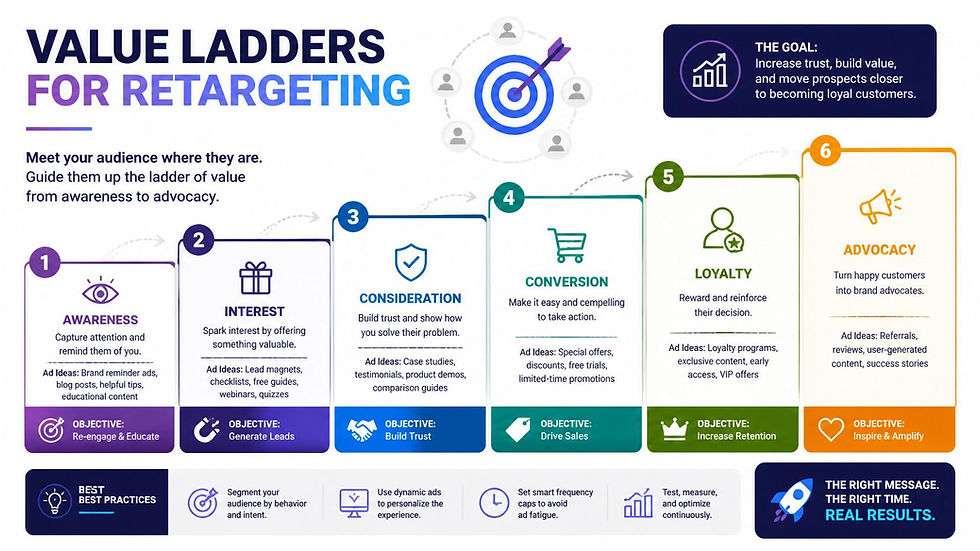
d. Retargeting Campaigns
Retargeting allows you to re-engage users who have previously interacted with your brand but didn’t convert. Since these users are already familiar with your brand, retargeting ads tend to have a higher conversion rate and are often more cost-effective than targeting new prospects.
e. Implement Automation
Ad platforms like Google and Facebook offer automated bidding options that adjust your bids based on campaign goals, ensuring that your budget is spent efficiently. Automation tools can help optimize ad placements, targeting, and bidding strategies to maximize ROI.
f. Prioritize High-Performing Campaigns
If certain campaigns or platforms are driving better results than others, consider reallocating more of your budget toward them. Scaling up high-performing campaigns ensures that you maximize your ROI while minimizing wasted spend on underperforming efforts.
g. Monitor and Adjust Regularly
Advertising is not a “set it and forget it” process. Regular monitoring is essential to ensure your campaigns are performing as expected. Use real-time data to adjust bids, pause underperforming ads, or increase the budget for successful campaigns.
h. Explore New Platforms
While established platforms like Google and Facebook dominate the advertising space, exploring emerging platforms can provide new opportunities at a lower cost. TikTok, Pinterest, and Snapchat, for example, offer relatively low-cost advertising options and access to unique demographics.

Optimizing your ad budget is essential for running effective and profitable advertising campaigns. By understanding the factors that influence ad spend, setting clear goals, and leveraging data-driven strategies, businesses can maximize the impact of their advertising dollars.
Remember that optimization is an ongoing process—what works today may not work tomorrow. Continuously test, analyze, and refine your strategies to stay ahead of the competition and achieve the best possible results. Those who manage and optimize their ad budgets efficiently are the ones who consistently outperform their competitors and drive sustained growth.
If you need help with your Ad creation and management, get in touch with us at


Comments