
The 80/20 Rule in PPC: Where to Focus for Maximum Returns


Most PPC accounts don’t fail because of lack of effort. They fail because of misplaced effort.
If you’ve ever:
Increased your ad budget but saw diminishing returns
Tweaked dozens of keywords with little impact
Run “everything everywhere” campaigns hoping something sticks
…then this blog is for you.
Enter The 80/20 Rule in PPC: Where to Focus for Maximum Returns — a principle that can single-handedly transform how you run paid ads.
The idea is simple but uncomfortable: 👉 Only ~20% of your PPC inputs are responsible for ~80% of your results.
Your job isn’t to do more. Your job is to identify what actually moves the needle — and double down on it.
In this deep-dive guide, we’ll break down:
How the 80/20 rule applies to PPC platforms like Google Ads, Meta, and YouTube
Exactly which 20% deserves your attention
Real-world examples and frameworks you can apply today
How small businesses can compete with bigger budgets by being smarter, not louder
Let’s cut the fluff — and focus on profits.
What Is the 80/20 Rule (Pareto Principle) — and Why It Matters in PPC
The Pareto Principle states that:
80% of outcomes come from 20% of causes.
In business, this shows up everywhere:
20% of customers generate 80% of revenue
20% of products drive 80% of profits
20% of tasks deliver 80% of results
In PPC, it usually looks like this:
20% of keywords generate 80% of conversions
20% of ads drive 80% of clicks
20% of audiences account for 80% of ROAS
20% of landing pages create 80% of sales
Yet most advertisers treat everything equally.
That’s how budgets get diluted — and performance stalls.

The Big PPC Mistake: Treating All Data as Equal The 80/20 Rule in PPC: Where to Focus for Maximum Returns
One of the biggest mistakes in paid advertising is over-optimization without prioritization.
You’ll see advertisers:
Optimizing low-volume keywords endlessly
Testing dozens of creatives with no clear winners
Running 15 audiences with tiny budgets
Tweaking bids daily instead of fixing fundamentals
This creates activity, not impact.
The 80/20 Rule in PPC: Where to Focus for Maximum Returns forces a mindset shift:
Stop managing accounts like spreadsheets. Start managing them like investment portfolios.
The Core Areas Where the 80/20 Rule Applies in PPC
Let’s break down where your most profitable 20% usually hides.
1. Keywords: Your Top 20% Are Doing the Heavy Lifting 0The 80/20 Rule in PPC: Where to Focus for Maximum Returns
If you run search ads, this will hit home.
In most Google Ads accounts:
A small group of high-intent keywords generates the majority of conversions
The rest mainly drain budget or provide low-quality traffic
High-Impact Keyword Characteristics
Your top 20% keywords usually:
Show clear purchase or action intent
Include brand, product, or solution-aware terms
Have lower ambiguity
Example:
❌ “best marketing tools”
✅ “hire PPC agency for e-commerce”
❌ “diamond earrings”
✅ “buy American diamond earrings online”
What to Do (Action Steps)
Pull a Search Terms Report
Sort by conversions or ROAS
Identify the top 10–20% of keywords
Allocate 60–70% of your budget to them
Pause or heavily limit the bottom performers
📌 More keywords ≠ more money. Better keywords = more money.
2. Ads & Creatives: Few Messages Truly Resonate
Most PPC accounts suffer from creative overload.
You’ll find:
20 ads running
2 doing most of the work
18 politely existing
Why This Happens
People don’t respond to:
Clever copy
Fancy words
Overloaded messaging
They respond to:
Clear problems
Simple benefits
Emotional triggers
Strong offers
Your High-Performing 20% Ads Usually:
Speak directly to a pain point
Address objections
Use social proof
Have a clear CTA
Example: Instead of:
“We offer digital marketing services”
Try:
“Tired of spending on ads with no ROI? We help brands cut waste and scale profitably.”
Optimization Tip
Identify top 2–3 ads per ad group
Pause underperformers
Create variations of winners, not brand-new experiments
3. Audiences: Not All Traffic Is Equal
Especially relevant for Meta Ads, YouTube Ads, and LinkedIn Ads.
Most advertisers cast too wide a net.
Your 20% High-Value Audiences Are Often:
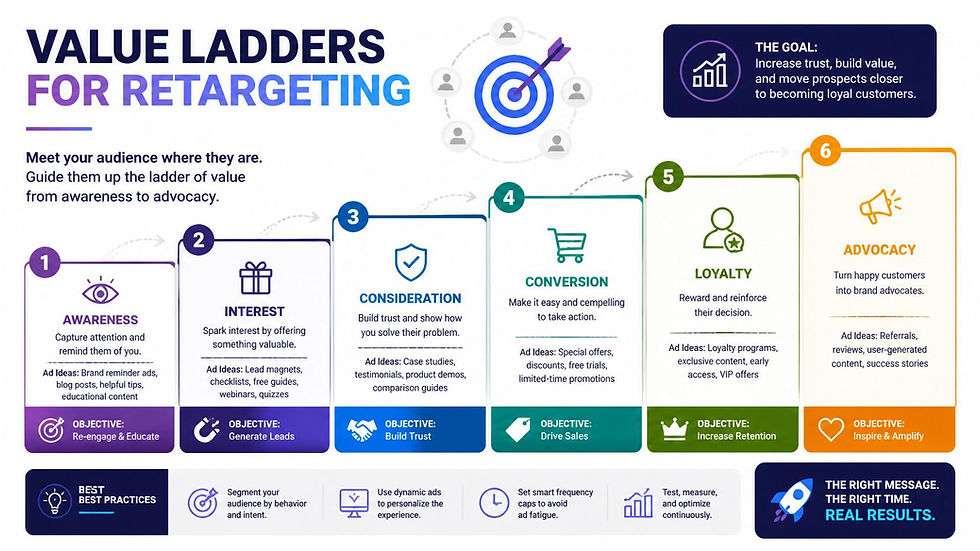
Website visitors (last 30–90 days)
Cart abandoners
Past buyers
Email subscribers
Lookalikes based on converters
Real-World Example
An e-commerce brand spends:
₹1,00,000 on cold traffic → ROAS 1.2
₹30,000 on retargeting → ROAS 4.5
Yet the cold campaign gets more attention.
That’s backward thinking.
80/20 Rule Application
Allocate 30–40% of the budget to warm audiences
Optimize creatives specifically for them
Shorten funnels for high-intent users
4. Landing Pages: One Page Usually Outperforms All Others
Here’s a painful truth:
You can’t out-optimize a bad landing page.
In most PPC setups:
One landing page drives the majority of conversions
Others leak traffic quietly
Your Top 20% Landing Pages Have:
Clear headline
One primary CTA
Fast load speed
Strong relevance to the ad
Minimal distractions
Analogy
Sending traffic to a weak page is like:
Filling a leaky bucket faster instead of fixing the holes.
What to Focus On
Identify your highest-converting page
Improve it further (copy, trust signals, UX)
Send more traffic there
Kill unnecessary variants
5. Time, Devices & Locations: Hidden PPC Goldmines
Most advertisers ignore performance by segment.
But often:
Certain hours convert better
Mobile outperforms desktop (or vice versa)
Specific cities or regions drive cheaper leads
Example
A local service business found:
70% of leads came between 7–10 PM
Mobile CPC was 30% cheaper
Two cities generated 80% of revenue
80/20 Actions
Use ad scheduling
Adjust bids by device
Focus budgets on high-performing locations
Small tweaks → big impact.

The 80/20 Framework for PPC Optimization (Step-by-Step)
Use this simple framework monthly:
Pull performance data
Sort by conversions or ROAS
Identify top 20% performers in:
Keywords
Ads
Audiences
Landing pages
Increase budget or visibility for winners
Reduce or pause losers
Repeat
Consistency beats complexity.
Why Small Businesses Win with the 80/20 Rule
Big brands win with budgets. Small businesses win with focus.
Using The 80/20 Rule in PPC: Where to Focus for Maximum Returns, you can:
Compete with larger players
Reduce wasted spend
Scale profitably without burnout
You don’t need:
100 campaigns
Daily micromanagement
Fancy hacks
You need:
Clarity
Discipline
Relentless prioritization
Common Myths About PPC Optimization (Busted)
Myth 1: More keywords = more growth Truth: Better keywords = better growth
Myth 2: You must test everything Truth: You must test what matters
Myth 3: Scaling means increasing budget Truth: Scaling means increasing efficiency
Final Thoughts: Focus Is the New Growth Hack 🎯
The biggest advantage in PPC today isn’t AI, automation, or secret tools.
It’s focus.
When you apply The 80/20 Rule in PPC: Where to Focus for Maximum Returns, you stop chasing vanity metrics — and start building predictable, profitable campaigns.
Remember:
Do less. But do the right things exceptionally well.
Want help identifying your most profitable 20% in Google Ads, Meta Ads, or YouTube Ads?
👉 Visit our website / Book a free PPC audit / Download our PPC optimization checklist👉 Or drop a comment below: “80/20” and I’ll share a free framework with you.
Let’s turn your ad spend into an asset — not an expense.
FAQs: The 80/20 Rule in PPC
1. How do I identify the top 20% in my PPC account?
Start by sorting performance data by conversions, CPA, or ROAS. Focus on keywords, ads, and audiences driving the majority of results.
2. Does the 80/20 rule apply to small budgets?
Absolutely. In fact, it’s more important for small budgets because wasted spend hurts more.
3. How often should I apply the 80/20 analysis?
Ideally once a month, or after every significant data accumulation (500+ clicks or conversions).
4. Can automation replace the 80/20 approach?
No. Automation optimizes execution. The 80/20 rule guides strategic focus — humans still win here.
5. Does this apply to Meta and YouTube Ads too?
Yes. Audiences, creatives, placements, and formats all follow Pareto distribution.


Comments